Credit Utilization
Credit utilization is the share of available revolving credit that is currently being used.
Credit utilization means the share of available revolving credit that is currently being used. It is most often discussed as a ratio between outstanding revolving balances and the available limits on products such as credit cards and lines of credit.
Why It Matters
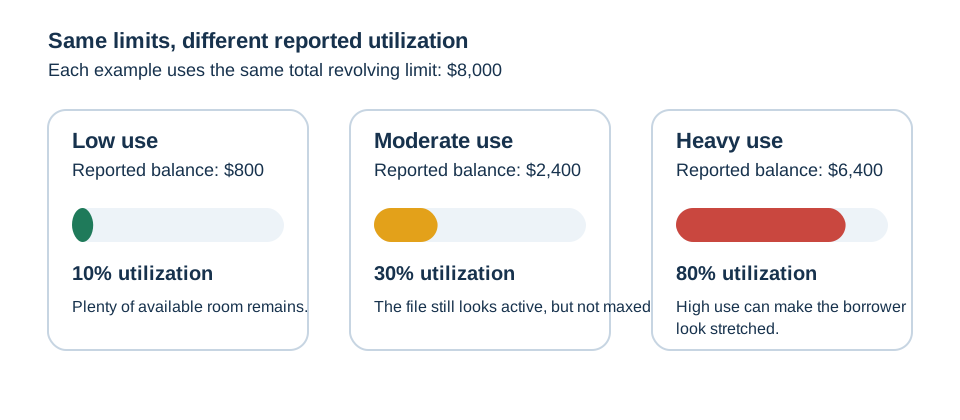
Credit utilization matters because heavy use of revolving limits can make a borrower look financially stretched even when payments are still current. High utilization does not automatically mean the borrower is in trouble, but it can influence how the file looks to lenders and score models.
It also matters because utilization is one of the few credit concepts readers can often observe directly. If balances rise and available room shrinks, the utilization picture changes, and that change can help explain why a score or lender response feels different.
How It Works in Canada
In Canadian consumer credit, utilization is most relevant to Credit Card and Line of Credit accounts because those are revolving products with reusable limits. A lender or scoring model is not only looking at whether the borrower pays, but also how much of the approved room is already in use.
Timing matters too. A borrower may pay down a card regularly, but if the Statement Balance reports at a high point in the cycle, the file may still show heavy use for that reporting period. That is one reason readers track both repayment habits and the way balances appear on the report through active Utilization Management.
Utilization Formula
For a combined revolving picture, the usual calculation is:
That formula is simple, but the reporting moment matters. The balance used in the calculation is often the amount reported for the cycle, not necessarily the amount the borrower expects after a later payment.
How To Read The Number
| Reported revolving balances | Total revolving limits | Utilization | What it signals |
|---|---|---|---|
| $800 | $8,000 | 10% | Light use and lots of available room |
| $2,400 | $8,000 | 30% | Moderate use that may still look manageable |
| $3,600 | $8,000 | 45% | Heavier use that can make the file look more stretched |
| $6,400 | $8,000 | 80% | Very high use that often draws concern even if payments are current |
Practical Example
A borrower has two cards with a combined $8,000 limit and owes $3,600 when the balances report. That is 45 percent utilization. If the borrower later brings the reported balance down to $1,600, the utilization picture becomes much lighter even though the credit limits did not change.
Common Misunderstandings and Close Contrasts
Credit utilization is not the same as total debt. A borrower can owe money in several places, but utilization specifically focuses on revolving limits and how much of that room is being used.
It is also not identical to a Statement Balance. The statement balance is one dollar figure on one account. Utilization is a ratio built from balances and available limits across revolving accounts.
Some readers assume utilization only matters if they miss payments. In reality, high usage can change how a file looks even before delinquency happens.
It is also not based only on one card unless the lender is reviewing that card in isolation. A borrower can look comfortable on one account and still show heavy combined utilization across several revolving accounts.
Related Terms
- Credit Score
- Revolving Credit
- Credit Limit
- Available Credit
- Utilization Management
- Responsible Credit Use
- Credit-Building Strategy
- Limit Increase
- Credit Card
- Line of Credit
- Statement Balance
- Minimum Payment
- Credit History
Knowledge Check
- What is credit utilization? It is the share of available revolving credit that is currently being used.
- Which products are most relevant to utilization? Revolving products such as credit cards and lines of credit.
- Can utilization matter even if no payment is late? Yes. High revolving usage can still affect how the file looks before any delinquency appears.