Grace Period
A grace period is the interest-free purchase window that can apply between a card statement date and its payment due date.
Grace period means the interest-free purchase window that can apply between a card Statement Date and its payment due date. In practical terms, it is the period during which purchase balances may avoid interest if the account is handled according to the card’s rules, usually by paying the full Statement Balance on time.
Why It Matters
Grace period matters because it is one of the biggest differences between using a credit card as a payment tool and using it as long-term debt. When the grace period is preserved, a borrower can use the card for purchases without immediate purchase interest. When it is lost, the same spending becomes more expensive.
It also matters because many readers think “I made the minimum payment, so I should still have the grace period.” That is usually not how the concept works.
How It Works in Canada
In Canada, grace-period treatment appears in the Cardholder Agreement and the issuer’s cost-of-borrowing disclosures. The common practical rule is that purchase interest may be avoided if the full statement balance is paid by the due date. If the borrower carries a balance, Purchase Interest Rate treatment can change, and certain transaction types such as cash advances often follow different rules from the start.
That is why the grace period belongs in the same conversation as statement balance, due date, and minimum payment. One isolated number on a statement does not explain the whole borrowing cost picture.
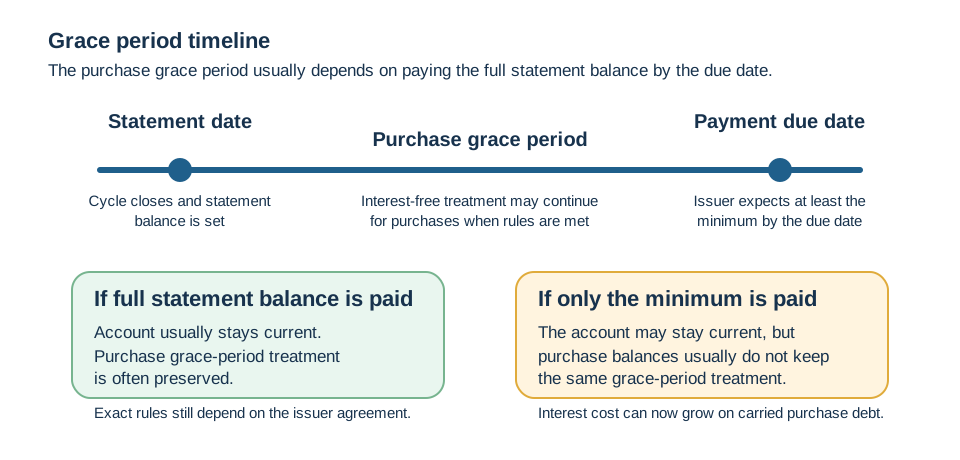
What Usually Preserves The Grace Period
| Payment by the due date | Account current? | Purchase grace-period treatment |
|---|---|---|
| Full statement balance | Usually yes | Usually preserved for purchase balances |
| Only the minimum payment | Usually yes | Usually not preserved in the same way |
| Less than the minimum | No | Late-payment risk and loss of clean account standing |
Practical Example
A borrower receives a statement showing $1,200 due. If the borrower pays the full statement balance by the due date, purchases from that cycle may avoid interest under the card’s grace-period rules. If the borrower pays only $100, the account may stay current, but the grace-period benefit for carried purchase balances is usually no longer intact.
Common Misunderstandings and Close Contrasts
Grace period is not the same as “time before any payment is required.” The account still has a due date and a required Minimum Payment.
It is also not the same as a Line of Credit borrowing structure. A line of credit usually charges interest on borrowed amounts without the same purchase-grace model that credit cards use.
Some readers also assume every card transaction gets a grace period. That is not a safe assumption because transaction type and account status can change the interest treatment.
Related Terms
- Credit Card
- Cardholder Agreement
- Statement Date
- Statement Balance
- Minimum Payment
- Purchase Interest Rate
- Credit Utilization
- Line of Credit
- Delinquency
Knowledge Check
- What is a grace period on a card? It is the purchase-interest window that can apply between the statement date and due date when the card is handled according to the issuer’s rules.
- Does paying only the minimum usually preserve the purchase grace period? No. The minimum payment can keep the account current, but it does not usually preserve the same interest-free treatment as paying the full statement balance.
- Why should borrowers read the card agreement? Because specific grace-period and interest rules can vary by issuer and by transaction type.